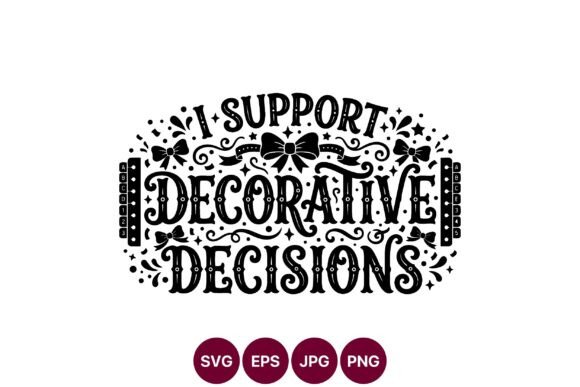
Support Decorative Decisions SVG: A Vintage Graphic for Elegant Illustrations
As a seasoned graphic designer, I’m always on the lookout for design assets that elevate visual storytelling without compromising clarity or professionalism. Recently, I came across Support Decorative Decisions SVG, and after testing it in several real-world scenarios—ranging from brand identity mockups to social media graphics—I wanted to share my insights with fellow designers and creative professionals.
A First Glance at Support Decorative Decisions SVG
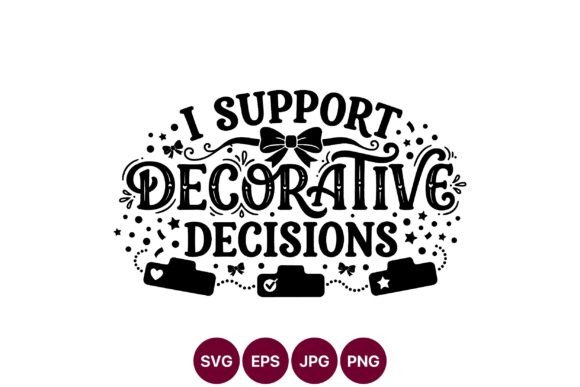
The first thing that caught my eye about this SVG is its vintage ornamental typography. The phrase “support decorative decisions” is artfully composed with an intricate blend of bows, stars, and swirling motifs in a black-and-white format. It’s clear this is not just any clipart—it's a thoughtful illustration designed to evoke elegance and sophistication. The detail level is impressive; each curve and flourish feels intentional, which speaks volumes about the craftsmanship behind it.
This type of asset naturally fits into handmade businesses, boutique product lines, or seasonal campaigns where a sense of tradition meets modern appeal. It brings a nostalgic yet refined mood, making it ideal for clients who want their branding to feel artisanal, personal, and visually rich.
Real-World Design Applications
I tested Support Decorative Decisions SVG in a variety of contexts to gauge its versatility and effectiveness. Here’s how it performed:
- Product Mockups: When placed on a printable wall art concept for a client’s new home décor line, it added a touch of charm and elevated the overall aesthetic. The ornate elements didn’t distract but instead enhanced the premium feel of the product.
- Social Media Graphics: On Pinterest-style pins and Instagram posts, the SVG worked well as a background element for quotes or promotional text. Its elegant composition helped create a cohesive look while standing out against clean color blocks.
- Logo and Brand Identity Concepts: While the SVG itself isn't a logo, it served as a strong supporting asset when designing brand elements like taglines or header accents. It gave a subtle nod to tradition without overpowering the primary branding.
- Invitations and Packaging Details: In a wedding invitation mockup, the SVG was used as a decorative border. The vintage flair matched the romantic theme perfectly. Similarly, on packaging designs for a small business selling handcrafted candles, it added a refined edge that justified a higher price point.
- Cricut Projects: As a Cricut user myself, I appreciated how easily this design cut through materials like cardstock and vinyl. The vector paths were crisp and scalable, allowing for both large wall art and smaller sticker applications.
- Editorial and Web Design: When layered subtly in blog headers or editorial spreads, it contributed to a more polished layout. However, I found it less effective in high-information environments where visual hierarchy needs to be strict and minimal.
Where This Asset Shines
Support Decorative Decisions SVG excels in situations where ornamentation supports the emotional tone rather than competes with it. Some of the best use cases include:
- Hero graphics for themed collections or holiday campaigns
- Decorative accents in print-on-demand merchandise such as mugs, tote bags, and stickers
- Background illustrations for Etsy products or handmade goods
- Visual elements in Canva templates aimed at lifestyle or creative brands
- Sublimation design overlays for adding texture to apparel or accessories
- Brand identity projects where vintage or elegant styles are desired
Use It With Caution
While this SVG is undeniably beautiful, there are some limitations to consider before using it in every project. It may not perform well in:
- Small sizes where fine details become lost or pixelated
- Crowded layouts that already have complex visual components
- Projects requiring high contrast against dynamic or patterned backgrounds
- Minimalist branding where simplicity is key
- Professional corporate materials where a more modern, clean design is preferred
In these instances, the ornate nature of the design can clash with the intended message or reduce readability. Always assess whether the design complements your client’s goals or might unintentionally complicate them.
Readability and Visual Hierarchy
One of the most important aspects of using any design asset is understanding how it affects readability and visual hierarchy. In this case, the SVG reads clearly in larger formats, especially when used in hero sections or centered within a white space. However, if you're placing it over busy content or alongside other text-heavy elements, you’ll need to adjust layer opacity or add a subtle shadow to ensure legibility.
I compared it with various font styles—serif, sans serif, script, handwritten, and display—and found that it pairs particularly well with bold, modern fonts. The contrast between the vintage ornamental style and a clean, contemporary typeface creates a balanced visual tension that can be very appealing in mixed-media designs.
Design Consistency and Emotional Appeal
When building a brand identity or campaign visuals, consistency is everything. Support Decorative Decisions SVG maintains a consistent vintage aesthetic throughout, which makes it suitable for creating themed design bundles. It adds warmth and personality to marketing visuals, helping to build emotional connections with audiences looking for authenticity and character.
That said, it’s important to ensure the SVG aligns with the rest of the design language being used. For instance, if your client is going for a modern design with geometric shapes and flat illustrations, this SVG might not fit unless carefully integrated as a stylistic accent.
Practical Designer Notes
Before incorporating Support Decorative Decisions SVG into a commercial project, here are a few things I recommend checking:
- Test in Black and White: Since the design is monochromatic, evaluate how it performs when recolored. Does it lose its elegance? Or does it adapt well to different palettes?
- Check Contrast on Light and Dark Backgrounds: I found that the SVG looks best on light-colored surfaces, though a dark version could work if you apply a white stroke or fill.
- Preview at Small and Large Sizes: Use it on t-shirt designs and also test it in tiny corners of a flyer to see how it holds up.
- Place on Real Mockups: Whether it’s a mug, tote bag, or website banner, seeing how it behaves in context is crucial. I used tools like Placeit.net and Photoshop to simulate realistic outputs.
- Test Print Quality: The PNG transparency (if included) allows for easy integration into print-on-demand workflows. But when printing, always check for bleed and resolution issues.
- Review File Formats: Confirm that you’re receiving the SVG along with editable vector files like EPS or AI for full customization. If only raster versions are available, note any limitations in scalability.
- Confirm Commercial Licensing: This is non-negotiable for professional work. Make sure the license allows for commercial use, resale, and redistribution as needed for your client’s purposes.
Final Thoughts for Creative Professionals
Overall, Support Decorative Decisions SVG is a valuable addition to any designer’s toolkit, especially those working with small business branding, handmade products, or seasonal campaigns. It brings a level of sophistication and attention to detail that many digital sellers and crafters would appreciate when elevating their Etsy shop or creative marketplace listings.
However, like all design assets, it must be used thoughtfully. This SVG works best in graphics where it can take center stage or serve as a supportive illustration without overwhelming the layout. When paired with the right visual strategy, it can enhance brand recognition, improve audience engagement, and give your client’s final deliverables a more curated, professional look.
If you're aiming for something beyond basic clipart and want to infuse a bit of vintage charm into your next project, this SVG is worth considering—but always let the client’s vision guide its placement and scale.