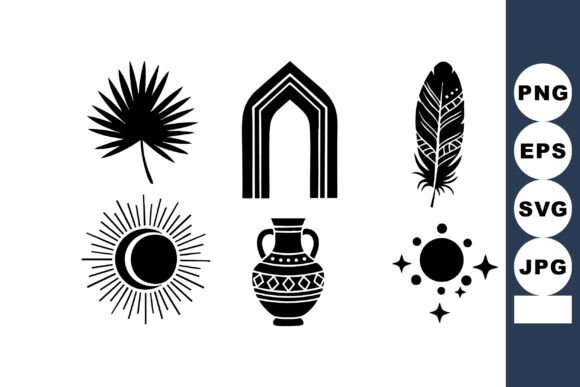
Tribal Decorative Elements Vector: Graphics & Illustrations for Local Branding
As a brand designer with years of experience, I’ve seen countless graphic design assets come and go. But Tribal Decorative Elements Vector stands out as a versatile and culturally rich resource that can elevate small business branding, product packaging, and promotional materials. This vector set offers a unique blend of traditional motifs and modern aesthetics, making it ideal for businesses looking to infuse personality and visual interest into their designs.
The First Impression: Cultural Energy Meets Creative Expression
Tribal Decorative Elements Vector immediately evokes an artistic mood. The black silhouette style of the sun, feather, vase, and geometric shapes gives it a timeless, almost ceremonial feel. This aesthetic suggests a brand that values craftsmanship, authenticity, and storytelling. It’s perfect for handmade businesses, local artisans, or any brand aiming to create a warm, inviting identity.
The elements have a slightly rustic yet refined quality. They feel organic and expressive, which makes them ideal for businesses in the food, home decor, or wellness industries. A bakery, for example, could use these elements to create a cozy, earthy vibe on menus or packaging. A skincare brand might incorporate them into labels to suggest natural ingredients and cultural heritage.
Real-World Applications for Small Business Branding
Tribal Decorative Elements Vector is not just a pretty set of illustrations—it’s a practical tool for real local business projects. From logo design to social media graphics, this asset can be used across multiple touchpoints. Here are some specific applications:
- Logo Design: Use the geometric patterns as a base for a custom logo, especially for brands that want to emphasize tradition or cultural roots.
- Product Labels: Add a decorative touch to product labels, such as for handmade soaps, candles, or specialty foods. The black silhouette style ensures clarity and readability.
- Packaging Design: Incorporate the elements as accents on boxes, bags, or gift wraps. They add visual interest without overwhelming the main message.
- Social Media Graphics: Use the vector elements to create eye-catching Instagram posts, Facebook banners, or Pinterest pins that reflect your brand’s personality.
- Printable Design: Turn the elements into printable inserts, thank-you cards, or seasonal greetings for customer engagement.
This asset also works well in editorial design, web design, and even Canva templates. Its versatility makes it a valuable addition to any creative marketplace portfolio.
Supporting Business Presentation and Customer Trust
One of the most powerful aspects of Tribal Decorative Elements Vector is how it enhances business presentation. When used effectively, it can strengthen a first impression, improve product recognition, and build trust with customers. A well-designed package or marketing material can make a small business stand out on the shelf or online.
For example, a boutique store selling artisanal products can use these elements to create a cohesive brand identity. The consistent use of tribal motifs across packaging, website banners, and social media graphics reinforces brand recall and creates a sense of professionalism.
Additionally, the design helps establish a clear visual hierarchy. By using the elements as accents rather than dominant features, you can guide the viewer’s attention while maintaining a clean, organized look. This is especially important for product labels where clarity and legibility matter.
Where Tribal Decorative Elements Vector Works Best
Tribal Decorative Elements Vector shines in situations where visual storytelling and cultural expression are key. Here are some of its strongest use cases:
- Product Labels: Use the elements to add a unique flair to product labels without distracting from essential information.
- Packaging Accents: Incorporate the motifs as borders, corners, or background textures on packaging to create a more engaging unboxing experience.
- Hero Graphics: Feature the elements prominently on website banners or promotional posters to capture attention.
- Seasonal Campaigns: Adapt the design for holidays, festivals, or limited-time offers to create a fresh, relevant look.
- Social Media Graphics: Use the vector elements as overlays or frames in posts to enhance visual appeal.
These applications show how the asset can be adapted to different business needs while maintaining a strong, cohesive brand image.
When to Use Tribal Decorative Elements Vector Carefully
While Tribal Decorative Elements Vector is highly adaptable, there are situations where it may not be the best choice. Avoid using it in:
- Formal Corporate Branding: The tribal style may feel too informal for a corporate or high-end brand.
- Very Small Labels: The details may become lost when scaled down, reducing effectiveness.
- Crowded Product Packaging: Overloading the design with too many elements can confuse the viewer.
- Legal Information Areas: Ensure that text remains readable and not overshadowed by the decorative elements.
- Low-Contrast Backgrounds: The black silhouette style may not stand out against dark or patterned backgrounds.
It’s also important to consider the target audience. For a luxury minimalist brand, the boldness of the tribal motifs may not align with the desired aesthetic.
Practical Designer Notes for Using Tribal Decorative Elements Vector
Before finalizing any design, test Tribal Decorative Elements Vector on real packaging mockups to see how it translates in print. Check how it looks in black and white, and preview it on small labels to ensure clarity. If your brand uses color, test the elements with your palette to maintain consistency.
Compare the design with competitor packaging to ensure it stands out without being too similar. Review the print quality to avoid any issues during production. If the asset includes PNG or SVG files, inspect the transparency and editability to ensure flexibility in your workflow.
Finally, always confirm the commercial license before using the asset for client work, business branding, or physical product sales. Make sure it’s suitable for digital and print use, and check if it can be integrated into platforms like Canva or Adobe Illustrator.